CASA Litepaper
Bacon Games brings together a collective of award-winning game developers with a proven track record of building games that have been enjoyed by millions of players across the globe. We are firm believers in web3 technology and culture and have been involved in some of the most recognized projects in the space.
Introduction
The web3 gaming space faces a challenging reality: the current player base is far smaller than many projects claim, often inflated by bot activity or mere wallet counts. As pioneers in this field and seasoned designers, we recognize that the appeal of earning money through gaming is inherently niche. Let us repeat that again: Not everyone enjoys playing games for money. But there definitely is a substantial number of players that do. And just as with any niche that is large enough, great opportunities can be found within. The behavioral profile of the engaged P2E player resembles those of highly engaged players in F2P, while comprising a larger part of the population than their F2P counterparts, allowing for economies that can be sustained by a committed player base.
This document outlines the vision, mechanics, and economic model of CASA, aiming to provide potential partners and the gaming community with a comprehensive understanding of the project.
Creating an engaging, high quality game that can come online and deliver a full P2E experience to players within the reality of a limited audience size is the driving force behind the CASA concept. We aim to create a sustainable ecosystem that does not require hundreds of thousands of DAU to come online and become profitable for all parties involved, but instead build atop a sound economy model created by industry experts, that go hand in hand with truly appealing gameplay and a robust community to deliver sustainable value exchange between three distinct player profiles. As the audience grows and the space inevitably matures, the model has been designed to expand by creating new self-contained hubs that are yet interoperable between them.
CASA is an innovative closed-world action-adventure game that integrates roguelite mechanics with a Play-to-Earn (P2E) model, emphasizing on on-chain contracts to reward players. Built on Unreal Engine 5, CASA has been designed to offer a dynamic and engaging gameplay experience, allowing players to immerse themselves in a meticulously crafted world of assassins and for hire killers where everyone else is prey.
The year is 2049, players begin their journey in downtown London. A series of unexpected betrayals and murders have destabilized the once-unshakeable hierarchy of the ancient society of assassins known as The Veil, sparking a fierce power struggle between the clans. The world is rich with intrigue, character development, and immersive environments, providing a compelling backdrop for gameplay.

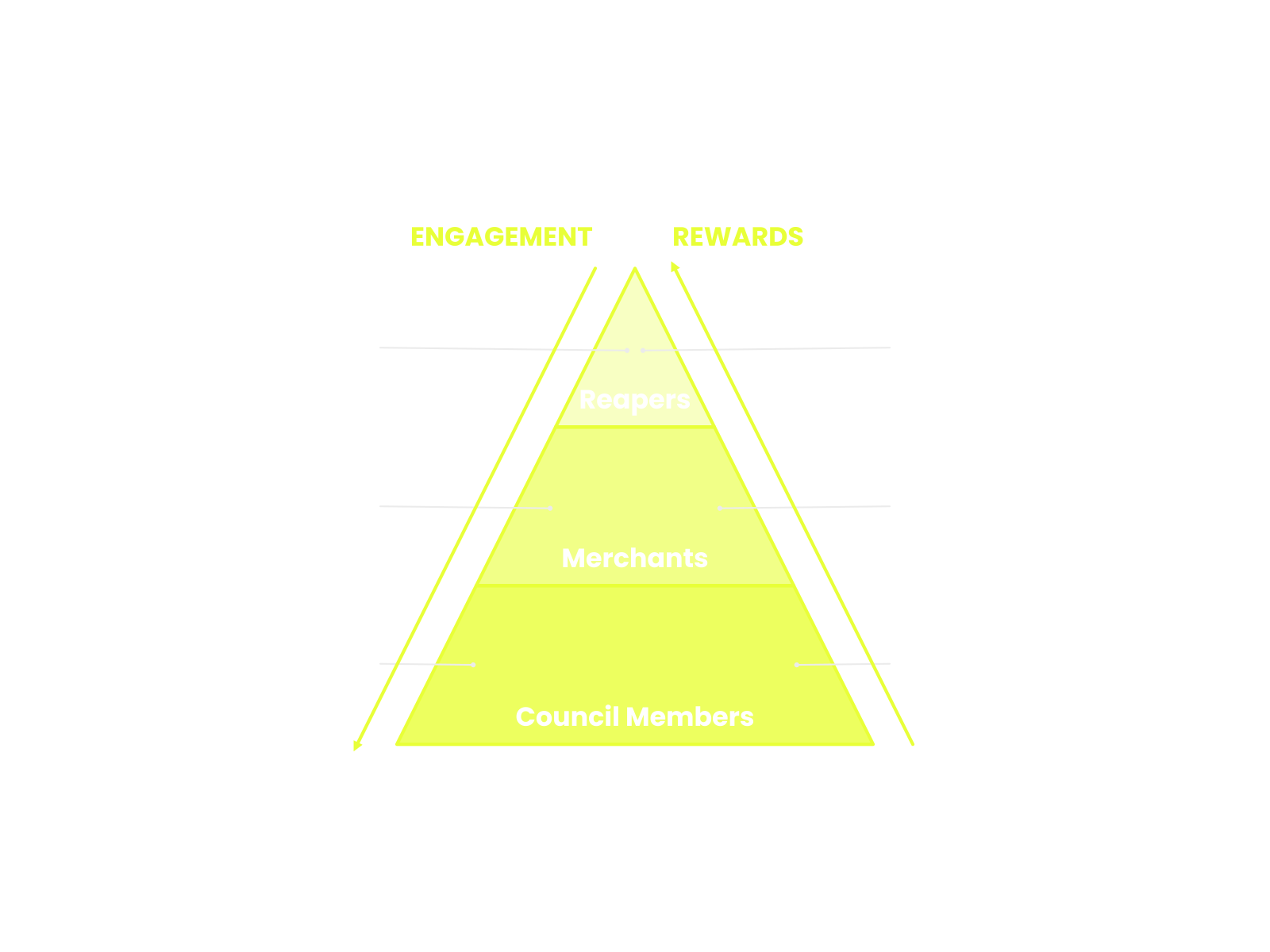
CASA allows its premium players (Reapers) to experience the fantasy of being a lucrative contract assassin that can bend the rules of physics to perform amazing feats, while free to play players get to build a merchant empire and profit by providing goods and services to premium players.
PREMIUM NFTs
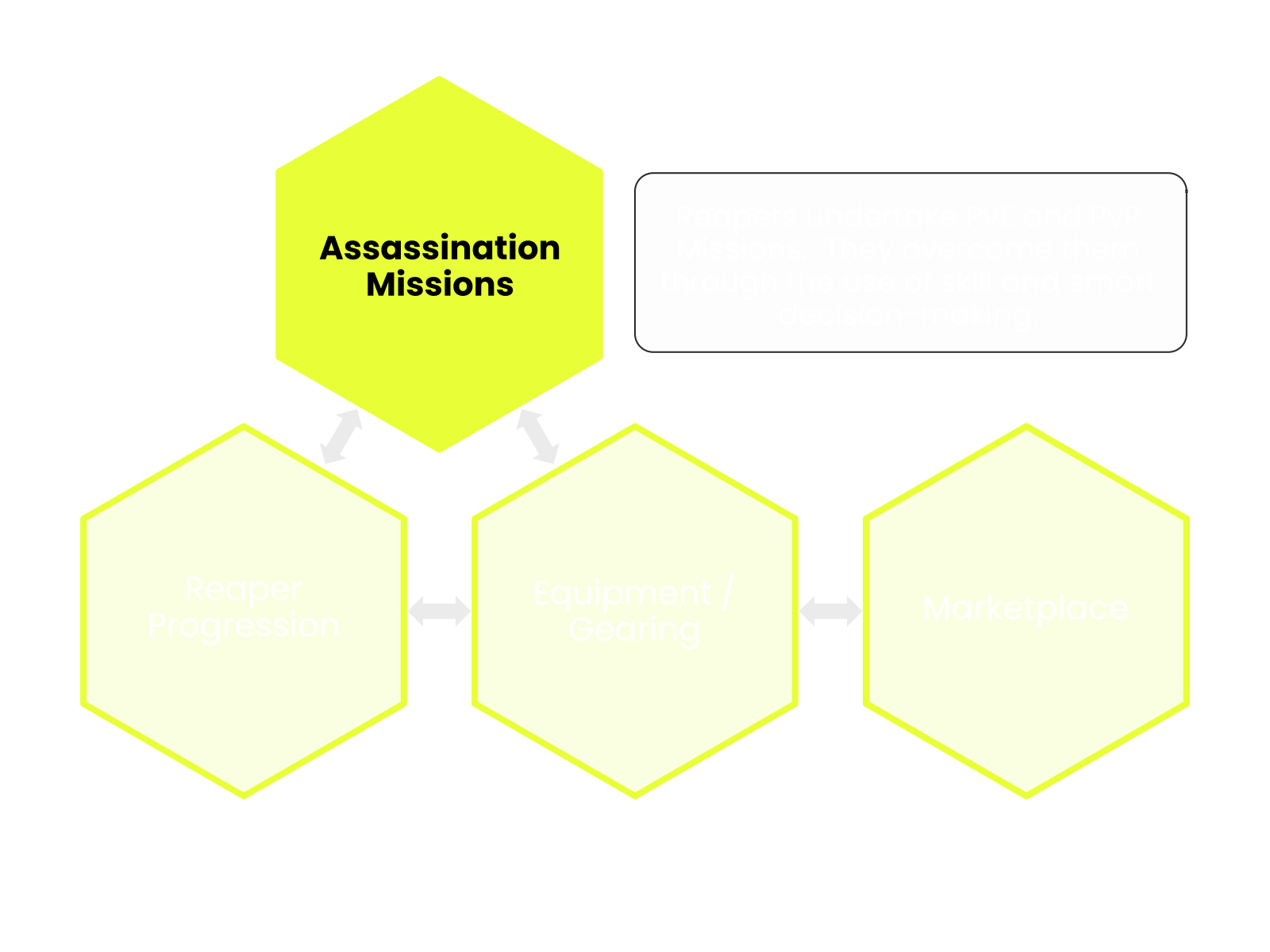
Reapers are the main protagonists, engaging in high-stakes PvE and PvP missions. They can earn $KEYS through successful contracts and missions, progressing to become the most powerful characters in the game.

F2P NFTs
Merchants play a crucial role in the game's economy, crafting and trading items. They gather materials, create gear, and provide essential services to Reapers, earning $KEYS by trading with them, and building their reputation.

DAO
Council Members are part of the game's decentralized governance system (DAO). They oversee economic activities, resolve disputes, and manage the distribution of $KEYS via contracts, ensuring a balanced and fair game environment.

Gameplay Mechanics
CASA's freeflow combat system is inspired by games like Batman: Arkham Asylum, featuring fluid and intuitive controls. Players can perform combos, use various weapons, and employ both stealth and brute force to defeat their enemies.

Missions are the core of CASA's gameplay, offering PvE and PvP challenges. Players accept contracts to eliminate targets, while Merchants provide the necessary equipment and supplies. PvE Missions have players facing off against NPC enemies, using stealth, strategy, and combat skills to overcome challenges, while PvP Mission allow players to engage in combat with others, either through direct confrontation or in competitive missions.
Missions themselves have varied themes, from high-stakes assassinations to intricate heists, each with its own unique challenges and rewards:
Assassination: Eliminate high-value targets.
Heist: Steal valuable items or information.
Rescue: Save hostages or allies.
Sabotage: Disrupt enemy operations.
Escort: Protect VIPs or critical assets.
Death in Casa is permanent. Once a Reaper dies, the NFT owner will have to reroll a new Reaper which will replace the old one, but starts over at level 1. The rarity of the new Reaper will correspond to the rarity of the original Reaper’s NFT. The new Reaper can bring over one item that the previous Reaper had in their possession.
The code of the Veil explicitly prohibits harming Merchants, but there have been a few known exceptions where this has been allowed. If a Merchant were to die, their craft would be lost.
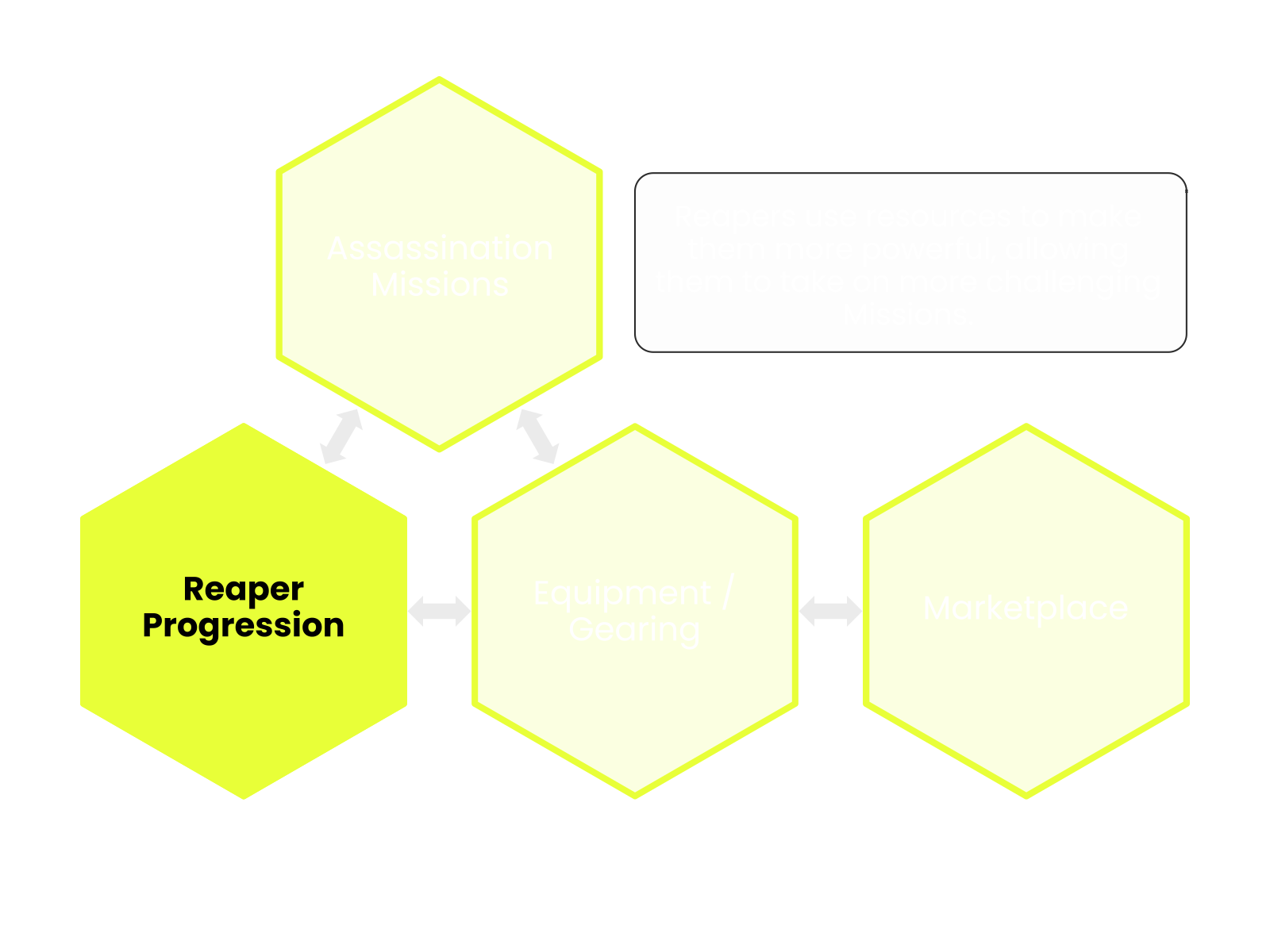
Reapers have various attributes (Strength, Intelligence, Dexterity, Stamina, Charisma) and skills (Athletics, Brawl, Melee Weapons, Ranged Weapons, etc.) that determine their effectiveness in missions and combat.
Reapers can belong to one of the ten Reaper Clans that operate in the shadows, each with their own set of abilities and benefits. Will you join the honorable, yet ruthless Kagegumi? Or are you more attracted to the business empire built by the Russian wolves of the Volki Bratva?
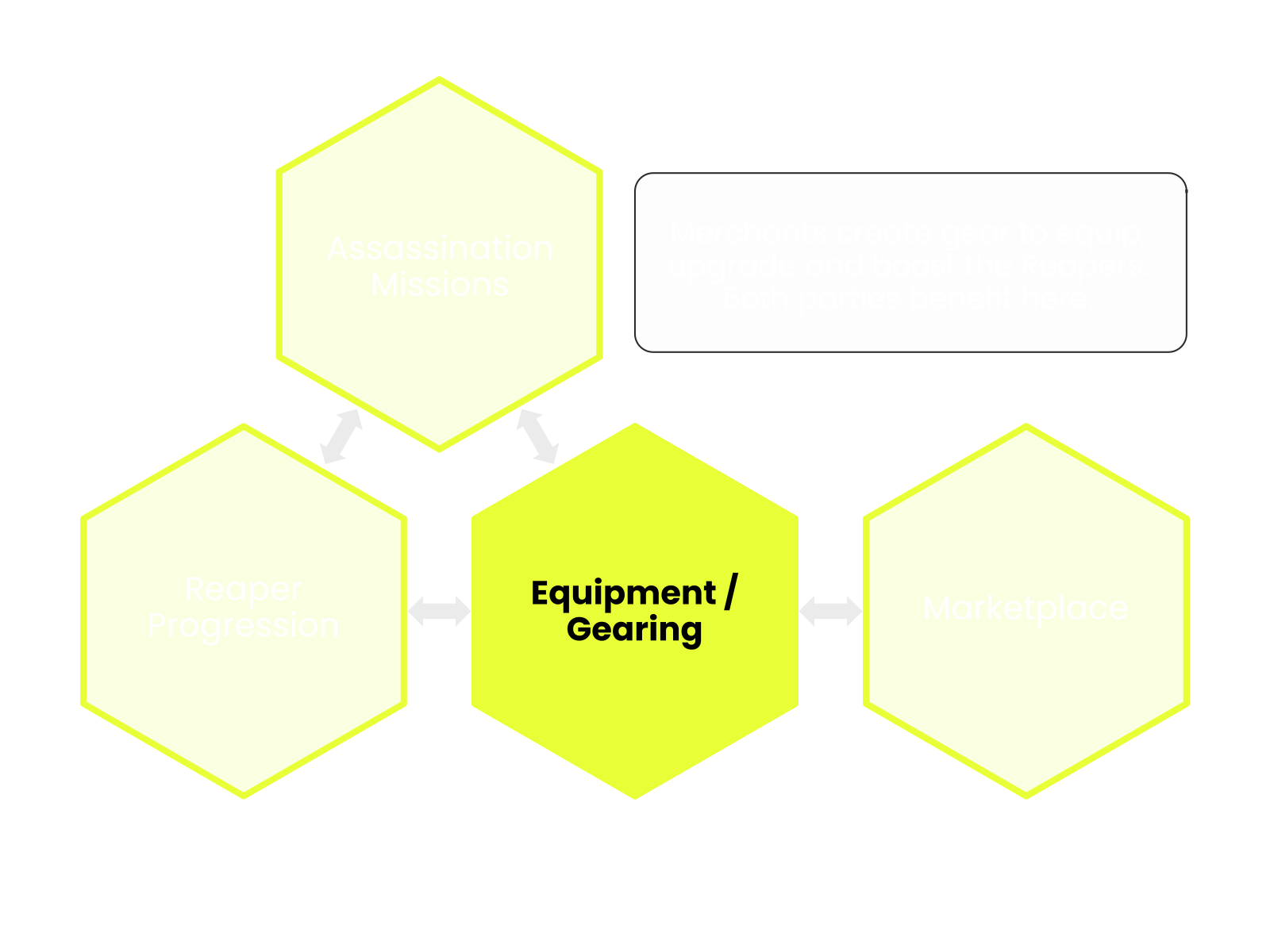
Merchants can specialize in different crafts (Blacksmith, Weaponsmith, Tailor, Chemist, Medic, Engineer), each with unique abilities and benefits. Specializations determine their success in creating high-quality items and recipes.
While Reapers are out in the world putting a bullet in someone’s head, the merchants are scavenging materials and weapons, to use them for crafting valuable items and ammo to sell to Reapers and increase their odds of survival. Crafting allows for new recipes to be discovered by the merchants as well as creating items of different rarities and power.
Both Reapers and Merchants have deep progression systems, with multiple tiers of advancement. XP is earned by completing Missions, which in turn allow Reapers to unlock new abilities and take on more challenging missions as they progress. Merchants on the other hand, gain XP as they craft items, which in turns allows them to craft new recipes and higher quality items.
Navigate the city, discovering hidden secrets and valuable resources. In CASA, your allies can become your enemies, and the political landscape is always changing.
Shadow Agents allow players to opt into a passive role, listing their Reapers to assist other players on missions. This feature enables players to earn rewards without active participation in every mission.
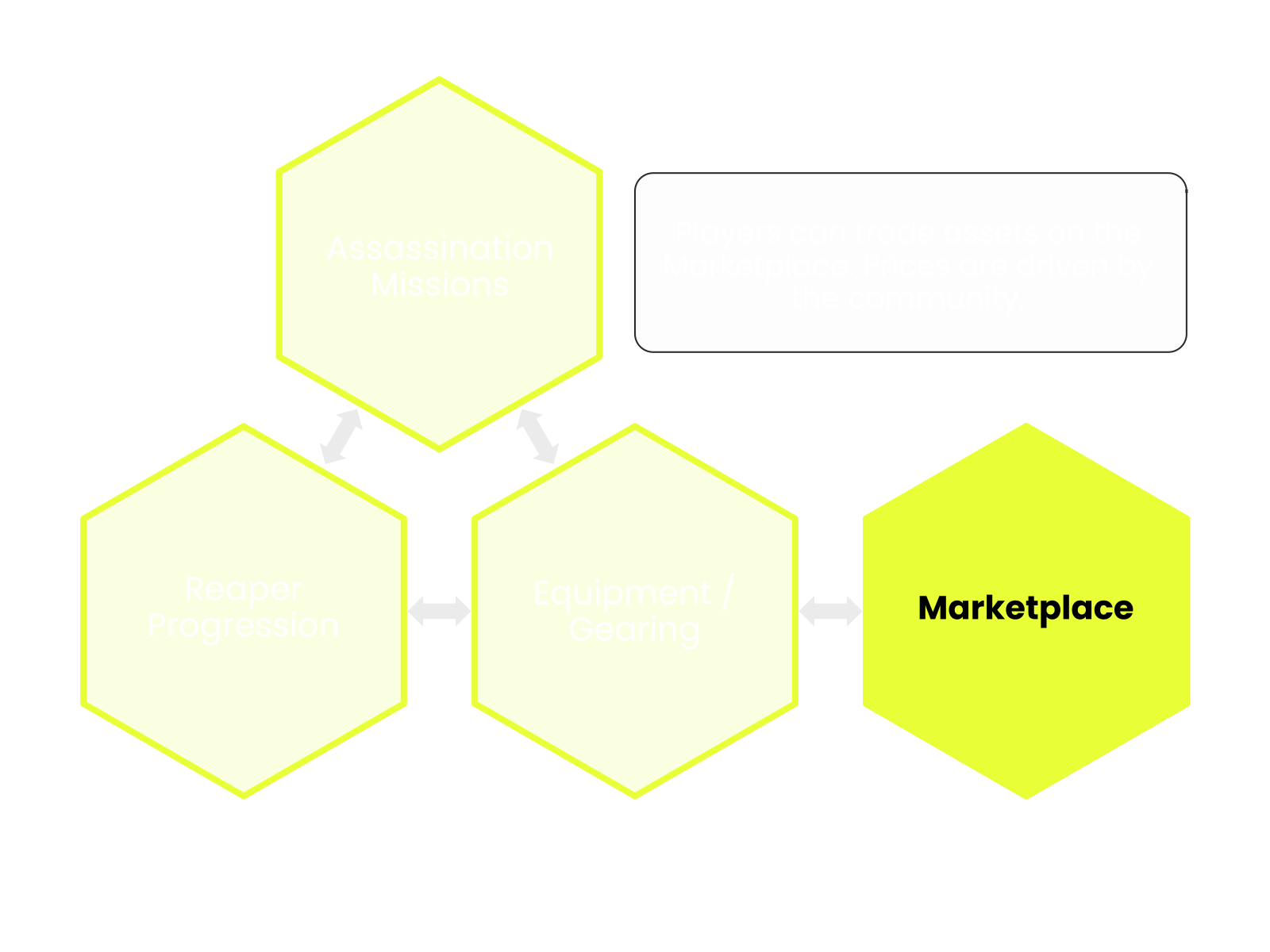
The marketplace is a central hub for trading NFTs, items, and consumables. Players can buy, sell, and trade assets, driving the game's economy and creating opportunities for profit.
Economy and Tokenomics
CASA offers various premium NFTs, including rare, epic and legendary Reapers, unique items, and limited-edition drops. These NFTs enhance gameplay and provide exclusive benefits to their owners.
$KEYS: The primary token used in marketplace transactions, Reaper progression, and accessing special services. Earned by Reapers through Veiled Council (DAO) sanctioned missions or through direct purchase.
Credits: Hard currency used by Merchants for crafting.
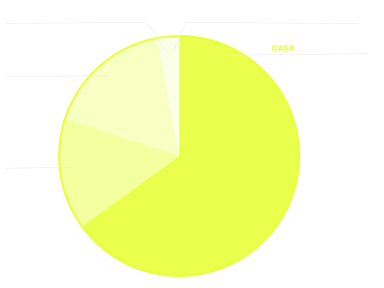
The $KEYS token is an integral part of the Keystone Foundation gaming ecosystem. At launch, a fixed supply of $KEYS will be assigned to CASA by the Keystone Foundation, with no plans to increase this amount in the future. Additionally, it is not expected that any other tradable tokens will be created or minted beyond this.
The distribution and unlocking of $KEYS tokens will proceed as outlined:
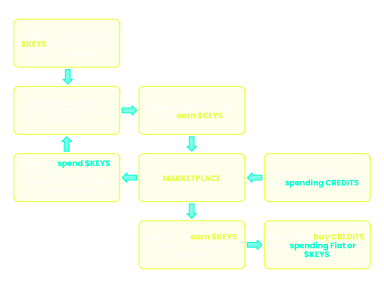
The economy loop is designed to be self-sustaining, with continuous interactions between Reapers and Merchants. The Veiled Council ensures economic stability and fair distribution of resources.
The CASA Rewards Treasury will be used to deliver the bounties to Reapers that will in turn feed into the game’s economy. Our model assumes that we will be spending 15% of the total of the CASA Rewards Treasury amount every year, for a total operation of ~6 years in rewards, without any source of $KEYS for the game. This timeline will be extended via several sinks that will be laid out in this document.
The economy has been modeled on the following play time premise for the two main player profiles:
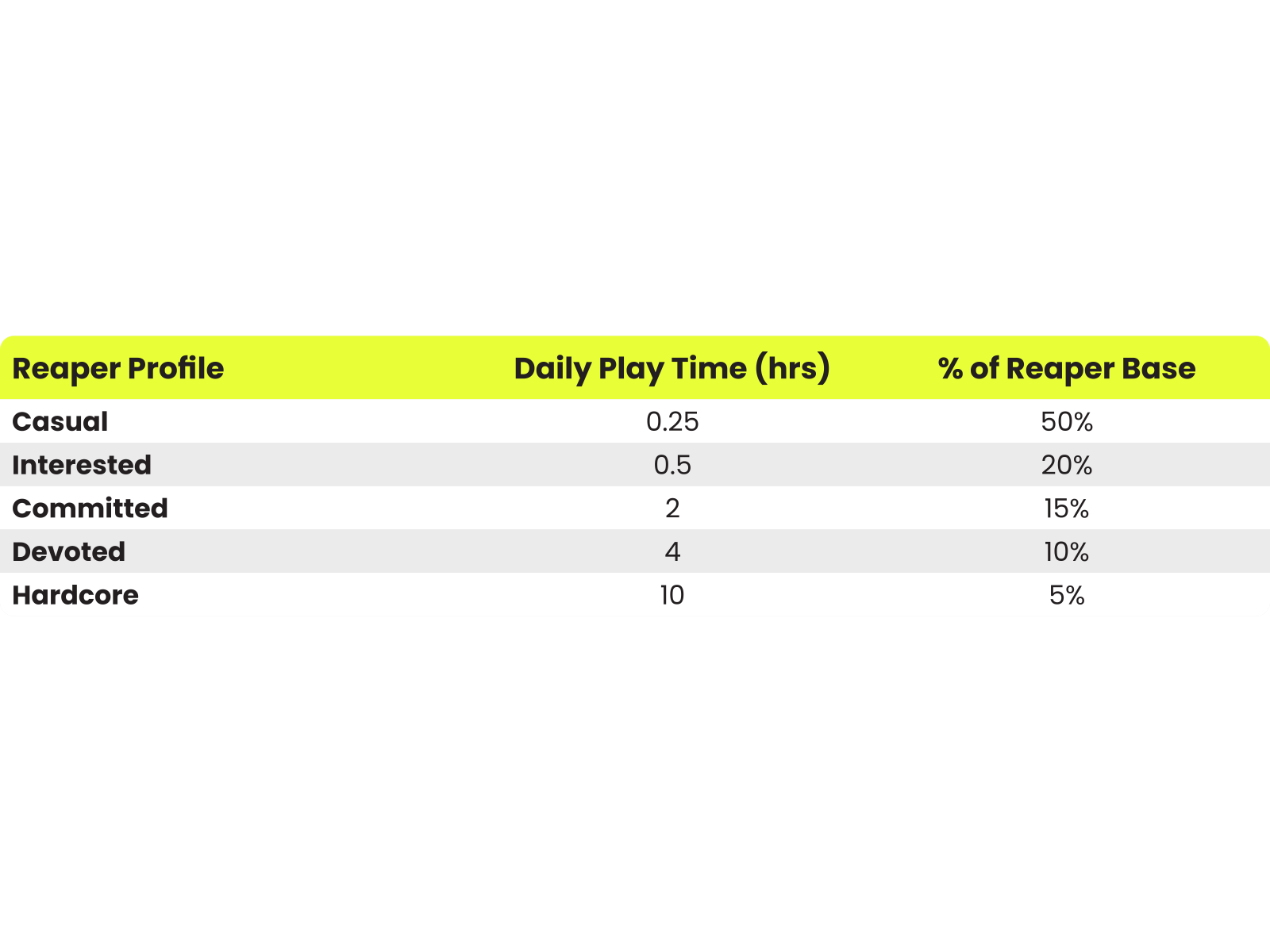
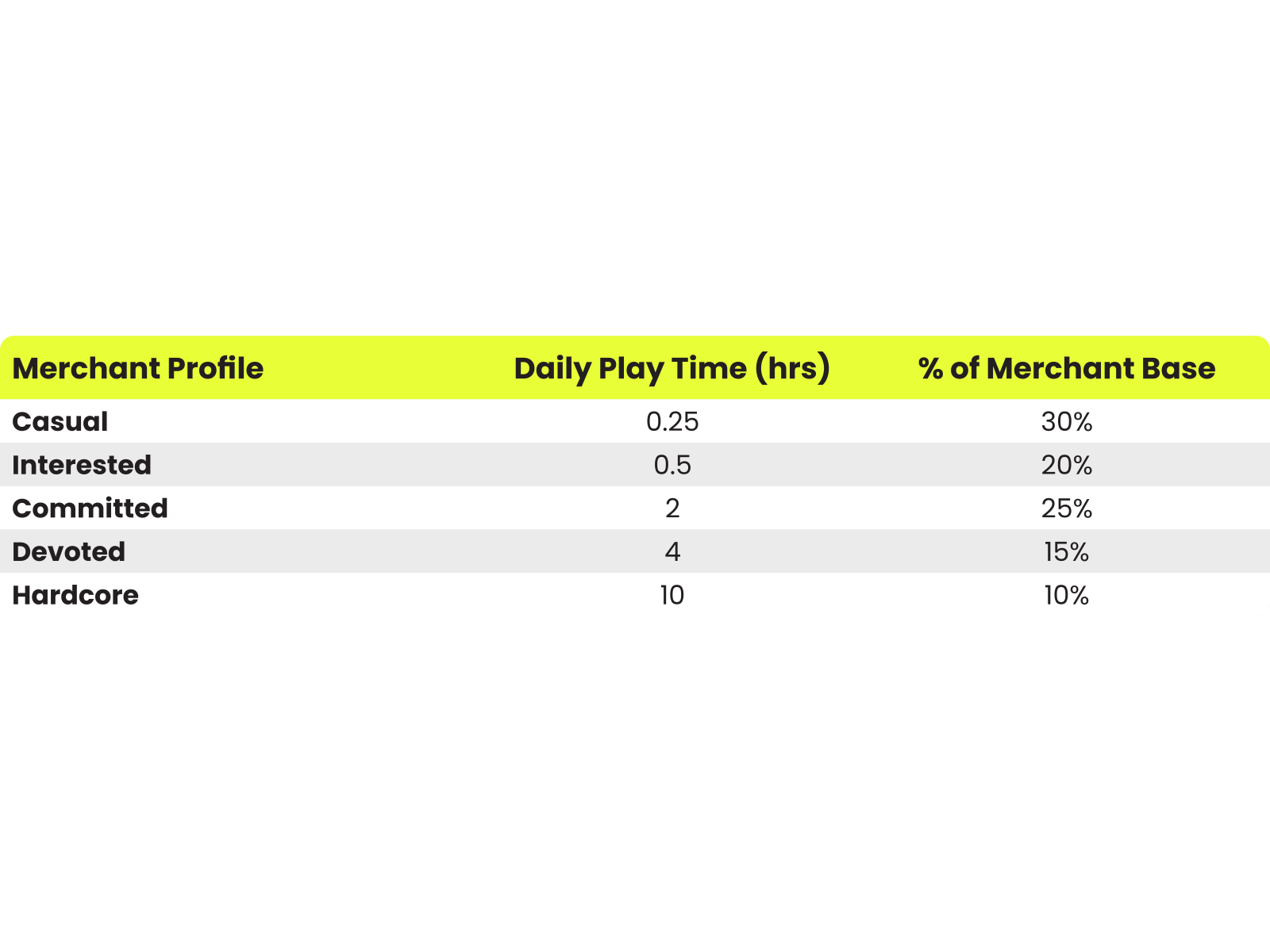
We operate under the assumption that F2P Merchants will lean towards investing more time as their game loop requires doing so in order to be effective and earn through item crafting, while Reapers can catch up by spending to itemize.
Each player profile is then used to calculate the odds of successfully completing content (within a certain time estimation) and thus earn $KEYS payouts in varying amounts depending on the difficulty of the content. This feeds the model with an hourly payout as well as a progression approximation in order to understand how fast players will progress through content and require the services of their Merchant counterparts.
For Merchants, a similar exercise is performed, where the profile of the Merchant determines both the item type distribution that will be crafted, as well as the rarity of the items. This allows us to estimate the crafting costs to be paid by the Merchants in order to create the different types of items, taking into account the time required to gather the materials for the item type and rarity. This cost is considered a hybrid sink as it can be paid in both fiat and $KEYS. It is estimated that 18% of this income will be used to replenish the Rewards Treasury for continuous operation.
In order for the model to work, we need to take into account Reaper deaths as it is a determining factor in the sustainability of the economy. We use estimates of survival based on the player profiles and the content difficulty and calculate an average Life Expectancy for each of those profiles. Each profile was also assigned a preference of gear type and rarity that will be taken into account in the model. With that in hand, we are able to calculate the demand of new gear and consumables as Reapers die during their regular gameplay sessions. This is what finally allows the P2P aspect of the model to be sustainable as we can then approximate the ratio of Merchants to Reapers that will satisfy the demand of items being crafted, without overflowing the market and maintaining some scarcity for the higher tiers. This comes out at about 2.3 Reapers per Merchant, and factors into the drop strategy for the genesis collection and all future NFT drops.
The goal for Reapers is to maximize their investment in both time and gear to accrue as many Mission Rewards as possible before their untimely death, resulting in a profitable run.
Finally, we model the pure $KEYS Sinks which include Gear Engraving and Augmenting as well as new character Skins that are added monthly. 100% of this income will be used to replenish the Rewards Treasury used for future Mission Rewards.
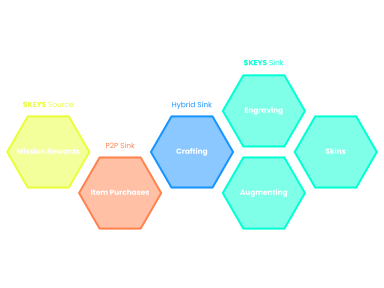
15% of the revenue from NFT drops (Reapers, Whisper Blades, Unique Gear, etc.) will be set aside to finance the Rewards Treasury. Even though the model presented before makes the economy loop self-sustainable, we want to make sure that the Rewards Treasury is always liquid in order to run in-game events and support growth and marketing activities financed by the Ecosystem Treasury.
Governance and Community Involvement
The Veiled Council is a decentralized autonomous organization that governs the game. Council members are elected by the community and have the authority to manage contracts, resolve disputes, and oversee the distribution of $KEYS tokens through Missions and events.
Within the council each member has specific roles and responsibilities. These roles include contract management, economic oversight, and community engagement. The structure ensures that all aspects of the game are managed transparently and fairly.
Council members use a voting system to make decisions. Proposals are submitted by members or the community, and decisions are made based on majority votes. This ensures that significant changes and developments are made with community input and consensus.
Community engagement is a cornerstone of CASA's vision. Not only can players participate in governance, we have years of experience of collaborating with the community by releasing the game at very early stages, allowing it to contribute to the game's evolution, and earn rewards for their involvement.
Technology Stack
CASA leverages blockchain technology to provide secure, transparent, and verifiable ownership of in-game assets. NFTs and smart contracts ensure that all transactions are immutable and trustless.
CASA uses established NFT standards, such as ERC-721 and ERC-1155, to ensure compatibility and interoperability with other platforms. These standards provide a robust framework for creating and managing NFTs within the game.
Robust security measures are in place to protect players' assets and data. These include encryption, multi-factor authentication, and regular security audits.
CASA is built using Unreal Engine 5, providing high-quality graphics and physics. Development tools and platforms are carefully selected to ensure a seamless and efficient development process.
To maintain a fair and competitive environment, CASA employs industry best practices in a mix of third party and proprietary anti-cheat mechanisms. These measures detect and prevent cheating, ensuring that all players have an equal opportunity to succeed.
Revenue Model
NFT Sales
In-Game Purchases
Marketplace Fees
CASA employs multiple monetization strategies to ensure long-term sustainability. These include limited NFT drops, premium services, and ongoing content updates.
Our focus on community engagement and decentralized governance ensures that CASA remains a vibrant and evolving ecosystem, attracting new players and retaining existing ones.
Roadmap and Development Plan
Combat Prototype
Reaper NFT Drop
Merchant NFT Drop
Open Alpha
Veiled Council DAO
$KEYS Token Integration
Early Access
Liveops and Events
Ongoing content updates
Our team consists of industry veterans with extensive experience in game development, multi-player systems, blockchain technology, and business management. The team has developed over the last decade multiple award winning mobile and PC games. We are dedicated to delivering a high-quality and innovative gaming experience.
We have partnered with leading experts in gaming, blockchain, and finance to guide CASA's development and ensure its success.
CASA collaborates with top-tier partners to leverage the latest technologies and industry best practices.
CASA represents a new frontier in gaming, combining the thrill of action-adventure gameplay with the benefits of blockchain technology. By providing true ownership and a decentralized economy, CASA empowers players to shape their own destinies and the future of the game.
Join us in this revolutionary journey and become a part of the exclusive CASA community.